
Duct Cable · Installation planning
Duct Cable Procurement: Pulling Tension, Bend Radius and Pull Sections
Turn a duct route into a cable enquiry with separate records for tensile limits, loaded bends and approved pull sections. Drum length alone does not define an installation plan.
Start with the route and the exact cable reference
A request for several kilometres of GYTA or GYTS cable does not tell a supplier how that cable will be installed. Two routes with the same total distance may have different bends, access points and pulling arrangements. Ask the project designer to identify the proposed installation sections, then connect each section to a controlled cable datasheet. The purchasing output should be a defined material proposal with clear approval conditions, rather than a promise that one model name suits every duct.
Keep pulling tension separate from everyday load descriptions
Corning's installation guidance calls for observing the cable's maximum tensile load and minimum bend radius. Use the limits supplied for the exact offered construction; do not copy a value from another model or an online rule of thumb. An operating load, breaking load and maximum installation pulling load are different specification questions. Ask the supplier to identify the applicable limit and ask the installation designer how compliance will be demonstrated for the proposed route and method.
Record loaded and installed bend limits separately
A cable under pulling tension may require a different bend radius from a cable resting in its final position. Put both conditions in the review sheet, including units and whether a quoted dimension is radius or diameter. Check the stated basis when a limit is expressed as a multiple of cable diameter. The actual offered outside diameter belongs in that calculation. A neat-looking loop in a chamber is not evidence that the cable was handled within its limit during installation.
Describe the route inputs before comparing offers
Give every proposed section an ID and show its endpoints, length, duct arrangement, changes of direction and accessible chambers. Mark uncertainties such as a section awaiting survey or clearance. The responsible installation engineer can assess the route and equipment against the cable requirements. Procurement should request the resulting approved section schedule, not attempt to calculate a safe pulling distance from total kilometres alone. This article is a purchasing checklist, not a substitute for a qualified installation design.
A drum length is not a permitted pulling distance
A supplier may offer a continuous length that covers several planned sections. That does not establish that the whole length can be pulled through the route in one operation. Conversely, dividing every section into a separate drum without review may introduce unnecessary joints. Agree the installation and jointing plan first, then reconcile manufacturing lengths, handling arrangements, end allowances and ordered quantities. Keep route distance, allocated cable length and spare quantity in separate columns so the order remains auditable.
Resolve changes before the affected material is released
Consider a route where an additional chamber becomes unavailable after the quotation. The original pull-section assumption may no longer hold, even if the cable quantity is unchanged. Record the revised drawing, identify affected drums and obtain the installation designer's decision before release. Similarly, a proposed cable substitution with a different diameter or tensile limit should reopen the relevant review. A lower unit price does not compensate for an installation plan based on a different construction.
Make acceptance of the offer explicit
Ask the quotation to state the cable reference, revision, installation limits and exceptions. Keep the designer's approval attached to that same revision and list any sections still on hold. Agree which documents arrive before production and which accompany each drum. This prevents a general catalogue sheet from becoming the only record for a route-specific order. The contractor remains responsible for approved equipment, handling and safe execution; a purchase order should not imply that the supplier has approved unseen site conditions.
Use the enquiry to close information gaps
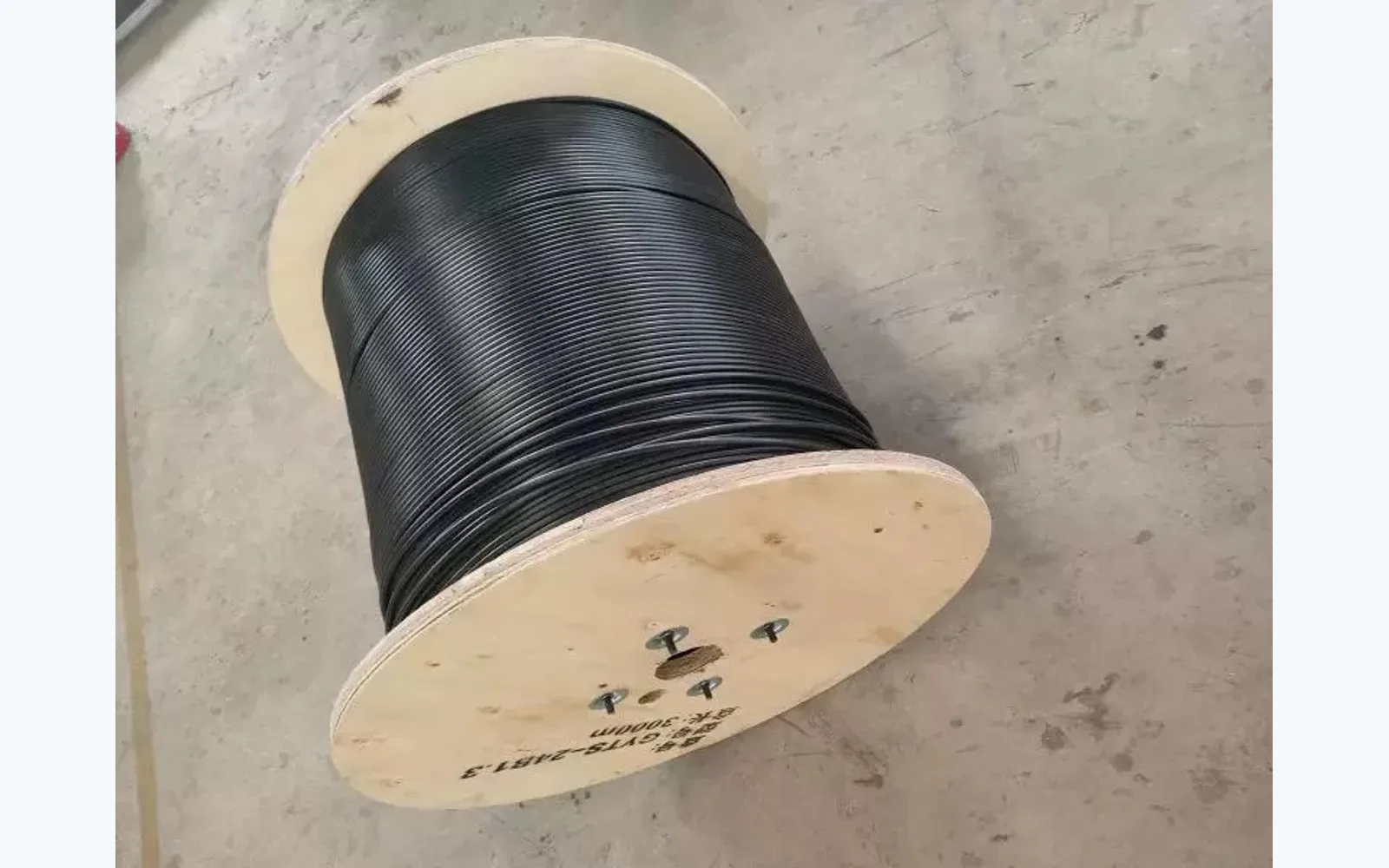
UKCC can quote cable supply against an agreed specification and drum schedule. Send known requirements and mark unknowns rather than filling gaps with assumed universal values. The cover photograph shows cable on a drum; it does not establish a pulling-load rating, bending limit or suitable section length. Follow the linked model comparison if the initial question is which construction to shortlist, then use this checklist to make the installation-related purchasing inputs precise.
FAQ: Is there one pulling-load limit for all duct fibre cable?
No. Request the documented installation limit for the exact construction offered and have the route reviewed against it.
FAQ: Can we use the installed bend radius while pulling?
Do not assume so. Obtain separate requirements for the loaded and final installed conditions, and confirm their units and basis.
FAQ: Does a two-kilometre drum permit a two-kilometre pull?
The supplied length does not approve an installation operation. The route, method and cable limits must be assessed together.
FAQ: Can we request a quotation before the survey is finished?
Yes. Identify provisional quantities and unresolved sections, and make the final cable and drum release conditional on the required approvals.
Duct cable purchase review matrix
| Input | Evidence to request | Decision to record |
|---|---|---|
| Cable construction | Offered reference, revision and diameter | Exact construction accepted |
| Installation tension | Model-specific maximum pulling load | Route review reference and owner |
| Bend limits | Loaded and installed radii with units | Both conditions checked |
| Pull sections | Controlled route and access schedule | Approved sections and unresolved holds |
| Drum allocation | Lengths reconciled to installation and joint plan | Quantity and length release |
Before releasing the order
- Identify every route section and drawing revision.
- Obtain the exact cable datasheet and outside diameter.
- Separate installation tensile limits from other load descriptions.
- Record loaded and installed bend radii without mixing radius and diameter.
- Have the responsible engineer approve the section plan and changes.
- Reconcile drums, allowances, joints and outstanding holds before production.
Related cable and procurement information
Technical reference
Send a route-based duct cable enquiry
Share the route drawing revision, duct details, proposed sections, fibre specification, cable limits requested by the designer, drum schedule and destination. We can prepare a cable offer and identify information still needed for approval.
Send the Duct Cable Enquiry