
Complex routes · Crossing review
ADSS Road and River Crossings: The Approval Checklist
Before ordering cable for a special crossing, connect the surveyed geometry, clearance requirement, load review and permission record to one approved revision.
Direct answer: a span rating does not approve a crossing
For a road or river crossing, keep cable procurement conditional until the responsible engineer has connected the surveyed crossing geometry, required clearances and relevant load cases to a specific cable design. Obtain the asset owner's permissions separately. A quotation headed 'long-span ADSS' cannot establish that the installed cable will clear traffic, water or adjacent infrastructure under the conditions the project must withstand.
Create one crossing identity before comparing offers
Assign a crossing ID and attach the current plan and elevation drawings. Distinguish horizontal distance from the actual cable geometry, identify support positions and attachment heights, and state the survey datum. Record road levels or the water-level reference required by the relevant authority. Mark provisional measurements clearly. If one bidder receives old heights and another receives revised drawings, their prices are not responses to the same crossing.
Ask who owns the clearance requirement
The buyer should request the applicable written requirement from the road, waterway, utility or project authority and record its revision. Do not copy a clearance number from a foreign installation guide. A river crossing may need a defined water reference and navigation envelope; a road crossing may involve traffic and maintenance constraints. These are questions for the responsible authority, not assumptions that a cable supplier should silently resolve.
Connect the design review to the quoted construction
The review pack should identify the finished cable construction, mass, diameter, mechanical data, attachment arrangement and the designer's load cases. Request the approved sag-tension and clearance assessment, including the conditions it represents and any unresolved limitations. Initial installation sag and the most restrictive in-service condition are not interchangeable. Corning's ADSS installation guidance places route surveying before installation planning; its product instructions and numerical values must not be applied as UKCC specifications.
Treat a changed support as a changed decision
Moving a pole, changing an attachment elevation or substituting a cable after approval can invalidate the relationship between the drawing and the review. Keep a short change register: changed input, affected crossing, reviewer, revised document and release status. A higher quoted tensile strength alone is not evidence that an alternative preserves clearance or fits the approved attachments. Request re-evaluation of the affected assumptions before accepting the change.
Separate permanent design from temporary installation access
The contractor should confirm how equipment and crews can reach both sides, who controls traffic or waterway access, and which permissions are needed for the installation operation. Procurement should capture resulting delivery and handling constraints without prescribing an unreviewed crossing method. If one bank cannot receive a drum or a road closure is not agreed, record an open installation constraint rather than treating the cable purchase as permission to start work.
Use a hold-point record, not a stack of unrelated PDFs
For each crossing, link the survey revision, clearance basis, design approval, quoted cable revision and permission status. Assign an owner and target resolution date to every open item. The release decision should say whether material can be ordered, delivered or installed; these are separate permissions. For example, a buyer may authorize a provisional quotation while withholding manufacturing release until geometry is approved. That commercial distinction must be written into the order.
What to request from UKCC
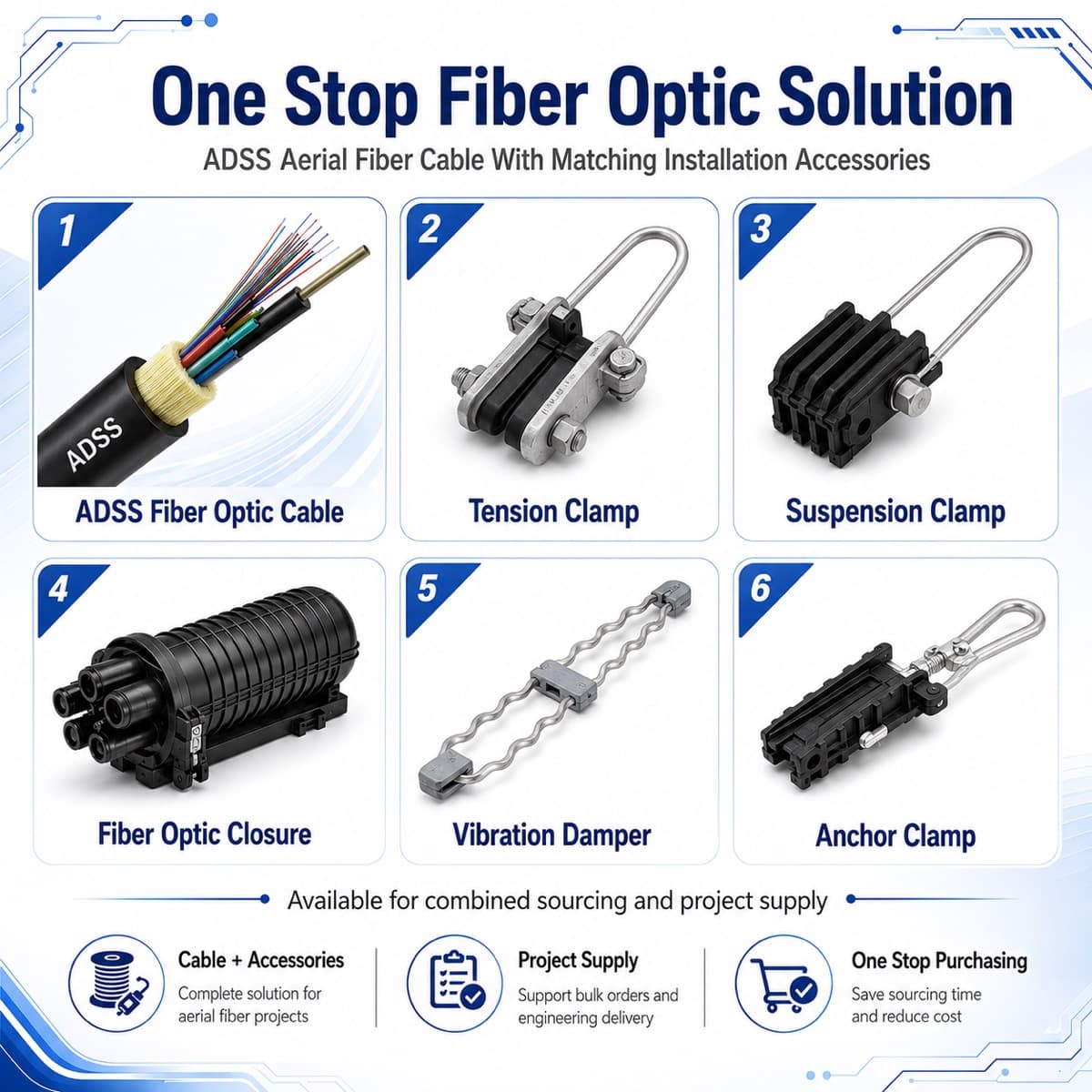
Provide the approved inputs so the supply review can identify a suitable construction and the evidence required for the quotation. Product and factory information support cable identification; they do not replace the project's clearance calculation, structure assessment or authority approval. The cover is a product-library reference image, not a record of a completed or approved crossing. This checklist supports document control and is not an engineering design or a safe-working method.
FAQ: Can the supplier decide the minimum crossing height?
The applicable requirement must come from the responsible authority and designer. The supplier can respond to the declared inputs but should not invent a local minimum from the crossing length.
FAQ: Is approval for a nearby crossing reusable?
Use it only as background. Different support elevations, obstacle levels, geometry or permissions require a review of the actual crossing. Keep the approval tied to its own drawing and cable revision.
FAQ: Can the order proceed while permission is pending?
Only with an explicit buyer decision defining the commercial exposure and the work that is allowed. Procurement approval is not installation permission; unresolved safety or design inputs remain hold points.
Crossing evidence and release ownership
| Decision | Record required | Party to identify |
|---|---|---|
| Geometry is current | Survey, datum, support coordinates and elevations | Survey reviewer |
| Clearance basis is applicable | Authority requirement and obstacle reference | Project authority |
| Cable matches the review | Construction revision and sag-tension/clearance assessment | Responsible designer |
| Work may proceed | Permissions and installation constraints | Asset owner and contractor |
Before releasing the purchase
- Give every crossing its own ID and drawing revision.
- Separate confirmed measurements from provisional inputs.
- Record the applicable clearance source and approving party.
- Match the reviewed cable construction to the quotation.
- List unresolved permissions, access constraints and their owners.
- State whether the signature releases quotation, manufacture or installation.
Supporting cable and route information
Technical background — not a crossing approval
Prepare a crossing review pack
Send the crossing ID, survey drawing, attachment elevations, clearance basis, load cases and approval owner. Identify missing inputs instead of estimating them in the purchase order.
Send Crossing Review Inputs