Underground Cable Procurement
Armored Fiber Cable for Duct or Direct Burial: What GYTA53, GYTS53 and GYTY53 Actually Change
A procurement guide to double-sheath armored outdoor cable, covering soil, water, rodents, pulling load, construction details and acceptance data.
Armour cannot correct a poorly defined route
Before requesting a 53-series cable, separate duct sections from true direct-buried sections. Record soil type, stones, groundwater, flooding, termites or rodents, trench depth, warning tape, sand bedding, road crossings and the installation method. Cable armour provides a defined layer of mechanical protection; it does not replace correct trench preparation, drainage, bend control or local civil-work rules.
Read the construction layer by layer
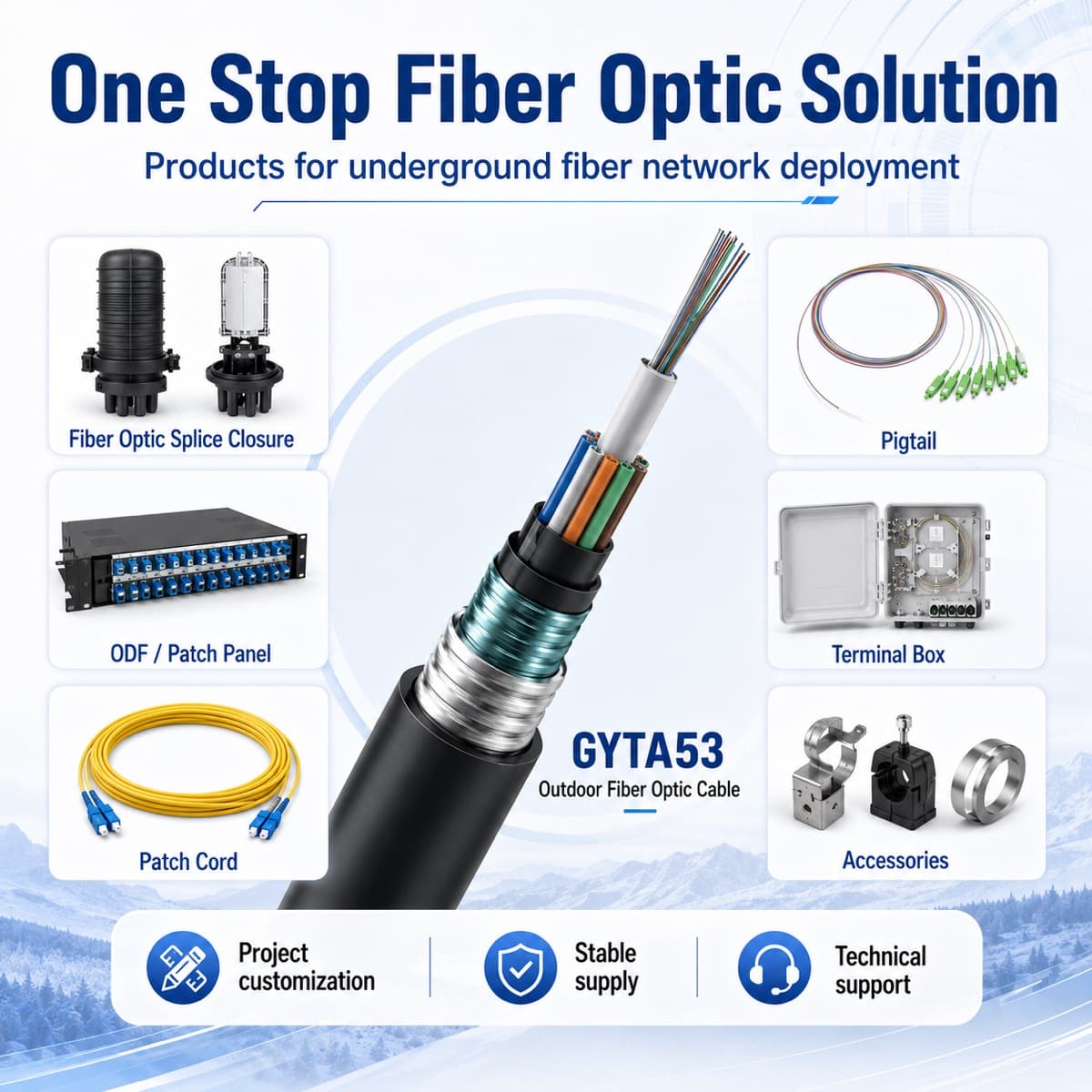
A common 53-series design has stranded loose tubes, a central strength member, water blocking, an inner PE sheath, corrugated steel-tape armour and an outer PE sheath. The material before “53” identifies other parts of the construction in the supplier’s naming system. Request a cross-section and written bill of materials with the quotation. This is more reliable than assuming every factory uses GYTA53, GYTS53 or GYTY53 in exactly the same way.
What GYTA53, GYTS53 and GYTY53 may indicate
GYTA53 is commonly offered with an aluminium moisture barrier plus the later steel-tape armour; GYTS53 may use steel tape in the cable core protection before the double-sheath armour; GYTY53 descriptions can differ between markets and therefore require particular care. These distinctions affect weight, metallic content and construction, but none should be accepted from the code alone. The approved cable drawing controls the order.
Duct armour and direct-buried armour are different decisions
An operator may specify extra rodent protection inside a duct, while another project uses a double-sheath steel-tape cable in prepared ground. Pulling load, sidewall pressure and duct diameter matter in the first case; soil pressure, impact and moisture dominate the second. Confirm whether the cable is pulled, blown, winched or laid into an open trench. The factory needs that information to evaluate diameter, weight and mechanical targets.
Water blocking and sheath integrity deserve separate checks
Ask whether the core uses filling compound, dry water-blocking materials or a combination, and how sheath integrity is checked. For water-penetration testing, define the specimen and acceptance requirement from the applicable standard or tender. A statement such as “waterproof cable” is not an inspection criterion. Also specify PE grade, sheath colour, termite treatment if required and any restrictions on metallic components.
Build the inspection plan before manufacture
Record the required tensile, crush, impact, bend, water-penetration and temperature tests and distinguish routine inspection from type qualification. IEC 60794-1-21 contains mechanical test methods used for optical cables, while the relevant product specification and contract set the severities and acceptance values. For shipment, request fibre attenuation, length, print, drum and appearance records for the actual production drums.
Underground-cable RFQ checklist
Send the route split by duct and direct burial; soil and water conditions; rodent or termite exposure; installation and pulling method; fibre standard and count; armour and sheath requirements; tensile and crush targets; drum schedule; cable marking; destination; inspection plan; and applicable standard. Ask the supplier to list deviations beside the offer, especially when a locally familiar model code is being converted into a factory construction.
Need help choosing a product?
Send the route, fiber count, quantity and destination country. UKCC Fiber can help match the cable and related FTTH materials.
Request Project Support