
ADSS · Power-line procurement
ADSS Near Power Lines: PE or Track-Resistant Sheath?
Select the sheath from the approved electrical exposure and the actual cable proposal, not from a voltage label alone. A practical document checklist for power-corridor procurement.
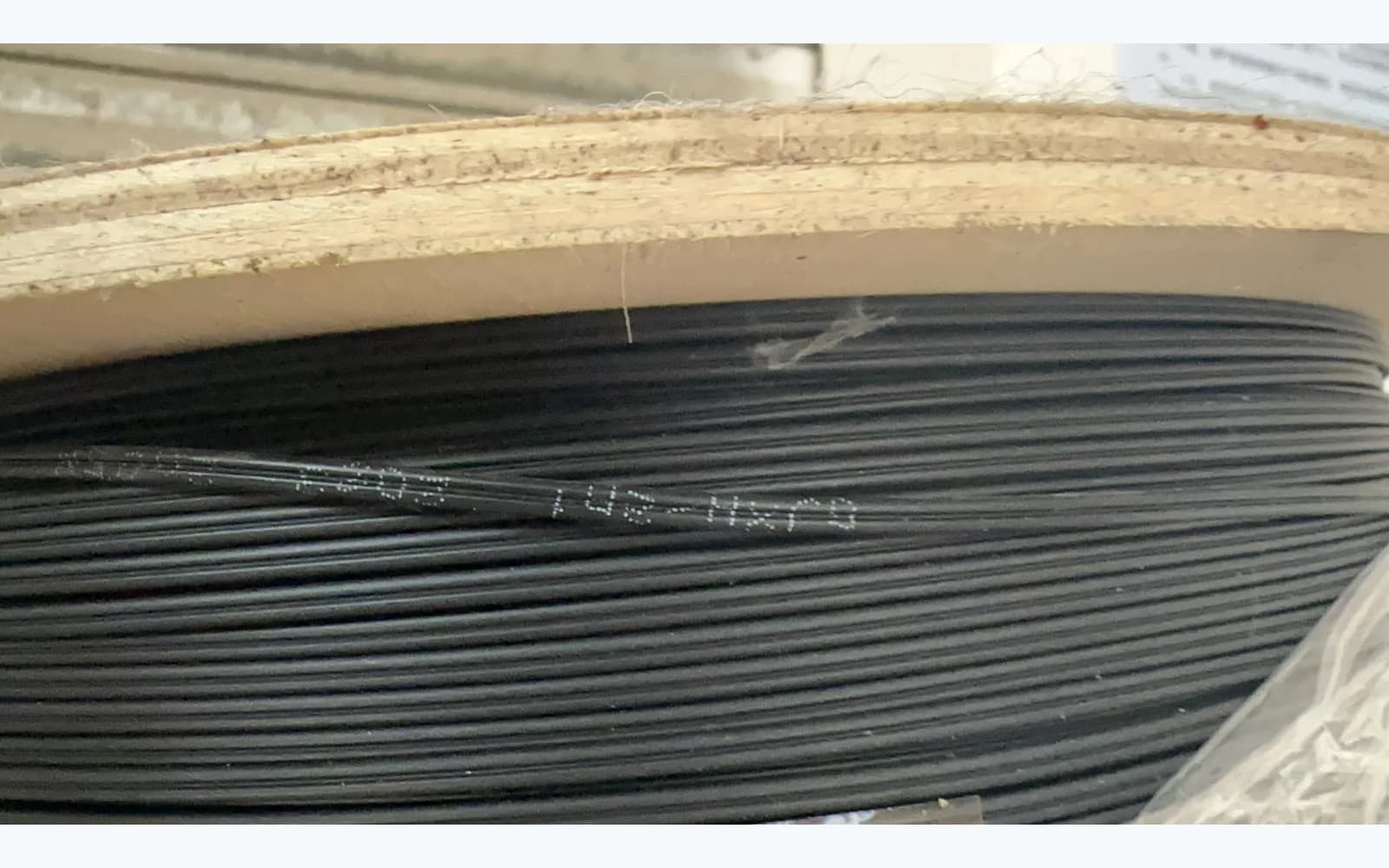
The purchase decision needs more than the line voltage
For ADSS beside an overhead power line, specify the sheath against the assessed conditions at the proposed cable position. Standard PE and a track-resistant compound are not interchangeable merely because two cables have the same fibre count and span rating. Obtain a proposal for the exact construction and have the line owner or responsible engineer approve its application. This is a procurement guide, not a clearance calculation or permission to work near energized conductors.
Understand the risk without turning it into a universal threshold
Corning's technical note explains that electrical coupling, wetting and contamination can contribute to surface discharges and jacket damage. The arrangement of the power conductors, cable and ground matters. Consequently, a line-voltage value cannot by itself describe the electrical exposure at every possible attachment point. Treat dust, salt contamination and wetting as site inputs to the engineering review, not as a reason to select a sheath from a photograph.
Read PE and AT as specification questions
PE identifies polyethylene; it does not establish a complete electrical performance rating. Track-resistant designs may themselves use a polyethylene-based compound. If a quotation says AT, anti-tracking or TRPE, ask what material designation, test requirement and application limits that supplier means. AFL's published ADSS options illustrate that sheath claims are associated with stated exposure conditions. Another manufacturer's limits must not be copied into a UKCC purchase order as a guarantee for a different cable.
Create one record for each distinct electrical route condition
Give each route section a drawing revision and list its support geometry, proposed optical-cable position and the relevant electrical assessment reference. Separate approved sections from positions still awaiting review. A procurement team can then request a firm offer for the released scope and a clearly conditional option for the rest. This avoids allowing a single general note on a kilometre schedule to silently cover several different tower arrangements.
Compare offers on evidence, not on a stronger-sounding label
Use the same request for both suppliers: exact cable reference, sheath designation, applicable test method and edition, acceptance criteria, report scope and stated limitations. Ask whether evidence concerns a material specimen or the offered cable construction. Identify who must accept that evidence before production. Do not reject a documented proposal merely because another offer uses a more impressive abbreviation, and do not accept an undocumented upgrade because its price is higher.
Keep the electrical review connected to hardware and mechanical design
Confirm which cable revision the fitting selection and mechanical calculation use. A change in sheath or construction can require those interfaces to be rechecked. Ask the responsible engineer whether the approved arrangement calls for additional protective hardware; do not add such items by guesswork. Wind, ice, span and installation conditions still need their own assessment. A track-resistant label does not replace mechanical approval or the line owner's safety requirements.
Make a change visible before releasing production
For example, if the route team moves an attachment after the cable is quoted, place the affected line item on review rather than assuming the original sheath decision still applies. Record the previous and proposed positions, assessment revision, disposition of any produced cable and approval owner. Release the order only when the accepted cable reference and route scope agree. The useful output is a signed decision for the affected section, not an unsupported assertion that every higher-grade sheath is suitable everywhere.
What UKCC needs to prepare a comparable offer
Provide the route information and evidence schedule together with fibre specification, quantities, drum plan and delivery destination. UKCC can prepare cable and accessory supply against the agreed scope and identify missing procurement inputs. Electrical design and safe-work authorization remain with qualified project personnel. The cover is a factory cable photograph: black colour, printing and drum appearance do not identify the sheath's electrical performance.
FAQ: Does a particular line voltage always require AT sheath?
Not as a stand-alone purchasing rule. Request the position-specific engineering assessment and the offered cable's documented suitability. Do not substitute a general internet voltage table for that decision.
FAQ: Is track-resistant sheath a completely different material from PE?
Not necessarily. Track resistance describes a performance objective; a track-resistant compound can be polyethylene-based. Obtain the supplier's precise designation and supporting requirements.
FAQ: Can an existing material report approve the whole route?
A report supports its stated specimen, method and conditions. The project approver must establish its relevance to the offered construction and route; it does not independently approve attachment locations.
FAQ: Can the crew install ADSS live because it is all dielectric?
Do not infer safe working conditions from that description. Work near power lines requires the line owner's authorization, qualified personnel and approved safety procedures.
Sheath selection: procurement evidence matrix
| Order field | Required record | Decision owner |
|---|---|---|
| Route scope | Section ID, support drawing and attachment revision | Route designer and line owner |
| Electrical exposure | Assessment reference and applicable site conditions | Responsible electrical engineer |
| Cable proposal | Construction revision, sheath designation and limitations | Cable supplier |
| Evidence | Test method, edition, specimen scope and acceptance criteria | Supplier and project approver |
| Release | Approved cable, fittings and unresolved deviations | Engineering and procurement |
Six checks before accepting a sheath option
- Identify the line owner and the approving engineer.
- Attach the current support geometry and proposed cable positions.
- Record the exposure assessment and any missing site inputs.
- Compare exact sheath designations and relevant test evidence.
- Reconcile the selected cable with mechanical and fitting documents.
- Close deviations and issue the approved revision before production.
ADSS supply and related route guidance
Technical background and its limits
Send the sheath review with the route enquiry
Share the destination, line-owner requirements, circuit and support drawings, proposed attachment positions, exposure assessment, cable construction and requested test evidence. Mark unknowns and name the engineering approver. We can align the cable offer and document scope with that review.
Send the ADSS Sheath Review